
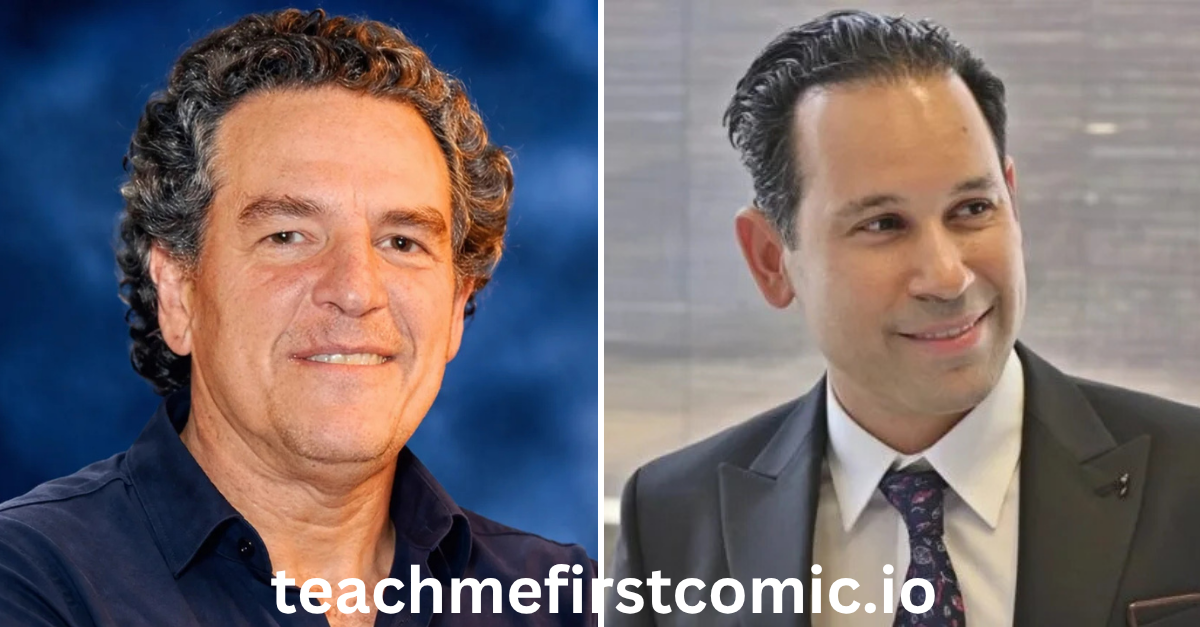
When the world thinks of iconic musicians of Carlos Scola Pliego the late 20th century, Sade Adu often tops the list. Yet, rarely does the public credit the quiet figures who shaped the artists behind the scenes. Carlos Scola Pliego is one such figure. While many recognize him as Sade’s first husband, his true identity as a documentary filmmaker and visual storyteller deserves its own spotlight. This is the untold story of a man who preferred the darkroom to the red carpet.
The film industry is filled with directors who scream for attention, but Carlos Scola Pliego represents the opposite archetype. He is the meticulous observer, the patient editor, and the visionary who understood that true cinema lies in the details. This article dives deep into his Spanish roots, his rise in European cinema, and why he remains one of the most enigmatic figures in entertainment.
Early Life and Spanish Cinematic Roots
Carlos Scola Pliego was born in Spain during an era when European cinema was undergoing a massive artistic revolution. Unlike the Hollywood glitz machine, Spanish filmmaking relied heavily on raw emotion and social realism. Growing up in this environment, young Pliego absorbed the works of directors who used the camera as a tool for truth, not just commerce.
While specific birth records remain private—a testament to his lifelong need for anonymity—sources confirm that Carlos Scola Pliego began his career not as a director, but as a script supervisor. This entry-level role taught him the grammar of film: continuity, pacing, and the silent communication between actors and the crew. It was the perfect training ground for a future visionary.
The Apprenticeship: Learning the Craft of Continuity
Before becoming a name behind the lens, Carlos Scola Pliego spent years on sets handling the most thankless job in the business: continuity. In the late 1970s, he worked on several low-budget Spanish productions where he learned that a single misplaced prop could ruin an entire scene. This discipline would define his later work.
His work ethic during this period was legendary among his small circle. Carlos Scola Pliego was known for carrying three notebooks on set—one for dialogue, one for action, and one for lighting notes. This obsessive organization caught the attention of international producers who were scouting for talent in Europe. Soon, the Spanish assistant was working on larger, cross-cultural productions.
Transition to International Cinema
The 1980s were a turning point. Carlos Scola Pliego transitioned from local Spanish films to massive international projects. His filmography during this era reads like a blockbuster checklist. He served as an assistant director on Never Say Never Again, the James Bond film starring Sean Connery. He also worked on the comedic chaos of Curse of the Pink Panther.
Working on a Bond set is a trial by fire. For Carlos Scola Pliego, it was a masterclass in managing chaos. He learned how to coordinate stunt teams, manage explosive special effects, and ensure that a global cast remained on schedule. This experience taught him that big budgets come with big egos, but a calm filmmaker controls the room. He did not just survive this era; he excelled.
The Documentary Shift: Finding a Voice
Despite his success in action and comedy, Carlos Scola Pliego felt creatively unfulfilled. Commercial filmmaking felt too transactional. Seeking deeper meaning, he pivoted hard into documentary filmmaking. This was his true calling. He left the world of car chases and entered the jungles of Africa.
His most significant work from this period is Ngira: Gorilas en la Montana (Gorillas in the Mountain). Carlos Scola Pliego traveled to the Democratic Republic of Congo to film endangered mountain gorillas. Unlike typical nature docs that stay in safe zones, Pliego embedded himself with local trackers. The resulting footage was raw, intimate, and full of a compassion rarely seen in wildlife cinema. He proved that a Spanish filmmaker could tell African stories with dignity.
Human Rights and the Lens
Beyond animals, Carlos Scola Pliego turned his camera toward human suffering. He directed Donde Termina El Corazon (Where the Heart Ends), a documentary that explored the complex social fabric of post-colonial Africa. This was not poverty porn; it was respectful ethnography. Pliego lived with his subjects for months before even turning on the camera.
For Carlos Scola Pliego, documentary work was a moral duty. He once reportedly said that cinema without conscience is just noise. His films focused on forgotten communities, highlighting the resilience of people living on the margins. While these documentaries never made him rich, they earned him deep respect among human rights film festivals in Europe, even if he rarely showed up to accept the awards.
The Sade Adu Chapter: Love and Privacy
In the mid-1980s, while working on a music video project, Carlos Scola Pliego met Nigerian-British singer Sade Adu. At the time, she was already a global star with Smooth Operator. Unlike the flashy music executives she was used to, Pliego was quiet, intellectual, and uninterested in her fame. He liked her for her art, not her chart position.
The couple married on October 11, 1989. During their six-year marriage, Carlos Scola Pliego remained a ghost. He attended album sessions for Stronger Than Pride but refused to be photographed. He was a stabilizing force for Sade, offering her a normal home life away from the stage. However, the pressures of touring and his need to film in dangerous locations like Africa created a rift. They divorced amicably in 1995.
Life After the Divorce
Many expected Carlos Scola Pliego to write a tell-all book after splitting from Sade. He never did. Instead, he vanished deeper into the woods. He returned to Spain and continued working on low-budget documentaries. He took a small crew role in Goal II: Living the Dream in 2007, but that was a favor to a friend, not a career move.
Unlike modern celebrities who monetize breakups, Carlos Scola Pliego chose silence. He never used the Sade name to sell a film or seek funding. This moral integrity is rare in the entertainment industry. He simply packed his cameras, moved to a quiet town in Spain, and stopped answering Hollywood calls. He wanted to be judged purely on his film work, not his marital history.
Why He Disappeared from the Public Eye
The disappearance of Carlos Scola Pliego from public records fascinates fans. The truth is simple: he was never comfortable with fame. As a documentary filmmaker, he preferred to be the observer, not the observed. By 2010, he had effectively retired. He sold his equipment and focused on photography as a hobby, not a profession.
Reports from Spanish film archives suggest that Carlos Scola Pliego now lives a monastic life, dedicated to reading and fine art. He occasionally mentors young Spanish filmmakers but refuses to be quoted or photographed. He has rejected several documentary proposals about his own life. He believes that the only stories worth telling are those of others, not his own.
The Technical Genius of His Work
Technically speaking, Carlos Scola Pliego was ahead of his time. He was an early adopter of lightweight 16mm cameras, allowing him to move silently through jungles and crowded African markets. His lighting techniques were revolutionary for low-budget docs; he used natural reflectors like white sheets and water surfaces to bounce sunlight without generators.
Editors who worked with Carlos Scola Pliego recall his specific rhythm. He cut on emotion, not action. If a gorilla blinked, that blink became the pivotal moment of the scene. This humanistic editing style made his animal documentaries feel like character studies. He treated every subject—whether a celebrity or a gorilla—with the same respectful gaze.
The Legacy of a Private Visionary
The legacy of Carlos Scola Pliego is a quiet one, but it is enduring. In a world of influencers and self-promoters, he stands as a monument to artistic humility. He proved that a filmmaker does not need a red carpet to be a visionary. He needed only a camera, a passport, and the courage to look at uncomfortable truths.
Today, young documentary filmmakers in Spain study his framing techniques. His gorilla documentary is occasionally screened at environmental film festivals. He did not change the box office, but Carlos Scola Pliego changed the way a few dozen filmmakers look at the world. And for a man who hated the spotlight, that was more than enough.
Conclusion: The Man Behind the Lens
Carlos Scola Pliego is not a cautionary tale or a celebrity footnote. He is a testament to the power of a life lived intentionally. From the sets of James Bond to the jungles of the Congo, he remained true to his craft. He loved a global superstar, lost her, and never exploited that loss for profit. That is not a failure; that is integrity.
If you ever watch a documentary about gorillas or a human rights film that makes you weep, think of the quiet person behind the lens. Carlos Scola Pliego dedicated his life to making sure you saw the truth. He never wanted you to see him. And perhaps, that is the truest definition of a visionary: someone who shows you the world so clearly that you forget there is a camera there at all.
Also read: Meredith Schwarz